
Ew, the VIPs are back in "Squid Game 3"
And a Hollywood star makes a cameo appearance — to which I ask, "Why?"


🚨 SPOILER ALERT: I mention a lot of spoilers, including an integral death, and the inclusion of a Hollywood star.
The original concept of “Squid Game” was that a group of incredibly wealthy (and predominantly white) men could vacation on a remote island to watch 456 poverty-stricken Koreans (and a few migrants) kill each other for a chance to win 45.6 billion Korean won (or roughly 33 million USD).
This time, they are joined by a woman who presents as an Asian American. Among all the Korean talent who gave nuanced, award-winning performances in season 1, the western actors portraying the VIPs ruined the flow each time they opened their mouths. The VIPS didn’t appear last season. (Yay!)
But they’re back and as insufferable as ever. Acting wise, the characters may actually be worse, sounding more like Sylvestor the Cat exclaiming sufferin’ succotash than a group of hedonistic oligarchs. In season 3, the VIPs even participate in the games cosplaying as pink soldiers.
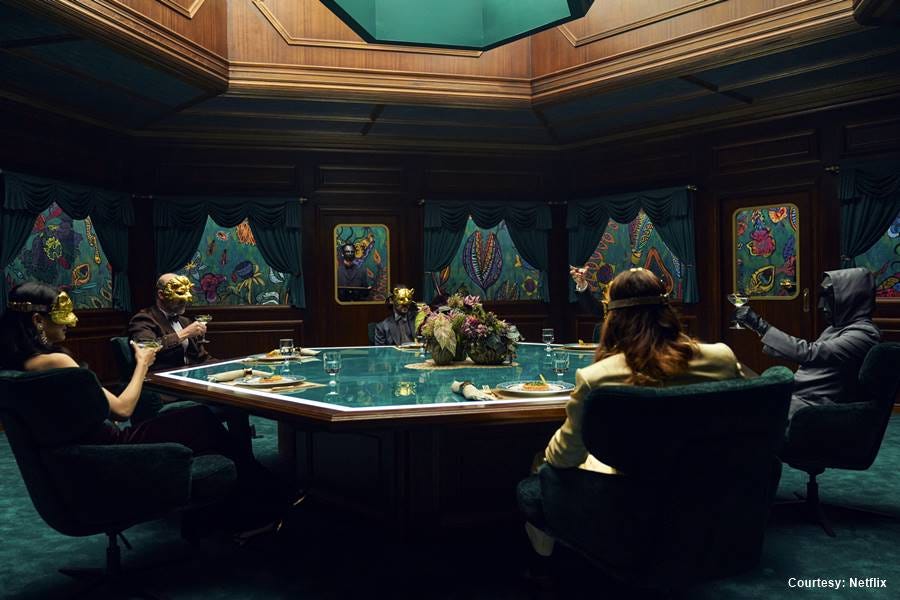
After season 1, there was a lot of online chatter about why the casting director didn’t hire better actors to portray the VIPs. Part of the reason is undoubtedly access.
In an interview we did for the Chicago Tribune, filmmaker Park Inje (who did not work on “Squid Game”) told me that when he was trying to cast a white actor to portray an American for his critically-acclaimed K-drama “Moving,” it turned out to be such a difficult task that he rewrote the character as a bilingual Korean adoptee who was raised in the United States.
Frank is an original character in the TV series that didn’t appear in the webtoon [that the show is based on]. We decided to take a little bit of creative liberty. “Moving” as a work kind of goes through Korean history. And we do feel that [adoption] is a part of Korean culture. Even though it was a painful past for Frank, we thought it’d be interesting to explore.
We shot his story in Korea. But we thought that if we paid attention to the art and the aesthetics, we could convey that there is a training camp in the U.S. where he was sent [to become radicalized] that mirrored the narrative of what was happening to others in Korea.
We get it. Korea is a relatively small and homogenous country that doesn’t have a large pool of multicultural thespians to choose from. And for the first season of “Squid Game,” creator Hwang Dong-hyuk obviously didn’t have a huge budget to hire overseas talent.

But I find it difficult to believe that with the phenomenal worldwide success of the “Squid Game” franchise, the creatives couldn’t find talented non-Korean actors who are believable in their roles.
I mean, they have money.
Case in point: Guess who shows up in the last couple moments of the series? Two-time Academy Award winner Cate Blanchett, who portrays the slap-happy Recruiter in Los Angeles. (Gong Yoo, of course, played the Korean original.) This clearly indicates that they had access to Netflix’s deep pockets.
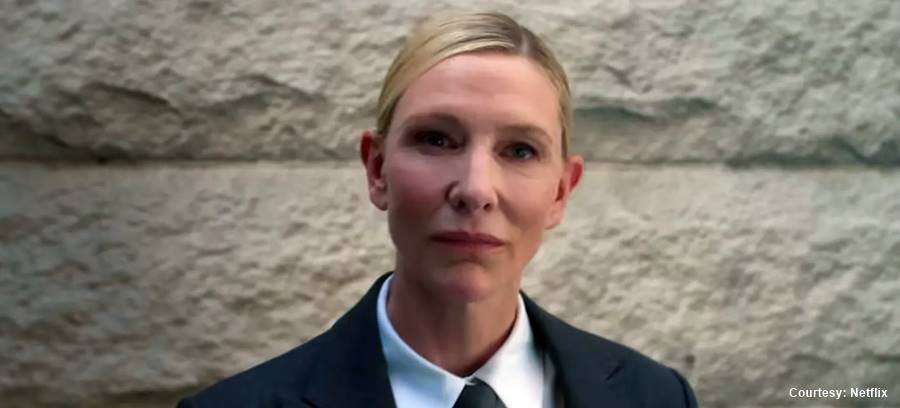
All of this makes me wonder if Hwang didn’t deliberately choose to include these horrible-in-every-way VIPs as a trope this time around. Viewers hating on them may result in more social media discourse, as everyone hammers out the pros and cons of these characters.
Circling back to Blanchett’s surprise cameo, Hwang told Netflix’s TUDUM that “she's just the best, with unmatched charisma. Who doesn't love her? So we were very happy to have her appear. We needed someone who could dominate the screen with just one or two words, which is exactly what she did.”
I love her, too! But, not in this part.
The addition of this Western female recruiter adds nothing to the season or the series and the entire scene plays off as forced and unnatural.
But, do you know where her cameo would’ve made perfect sense? As a VIP. The uber VIP of all VIPs. We could’ve all sat through the other VIPs’ rudimentary level of acting if this Queen was there to set the haughty, entitled tone.
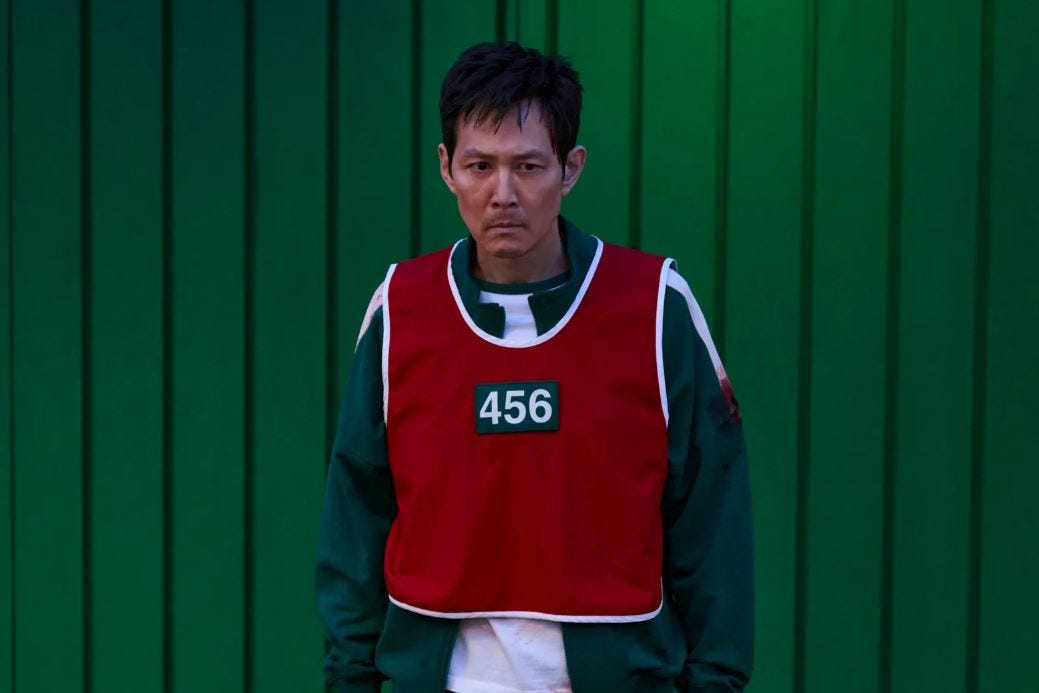
The penultimate scene would’ve made a more powerful ending than what Hwang chose. In-ho (aka the Front Man, played be Lee Byung-hun) visits Gi-hun’s daughter, who’s living in Los Angeles with her mother and stepfather. He hands her a pretty box with her father’s bloody track suit and a debit card with what’s left of his prize money from season 1. In-ho tells her that Gi-hun has died. By the time that information has registered, her anger has subsided and she has questions, oh so many questions to ask. But In-ho is gone.
Scene. And cut!
That’s where the series should have ended. But instead, it concludes with that goofy scenario with Blanchett, which serves no artistic purpose other than to (most likely) promote the upcoming western version of “Squid Game,” helmed by “Fight Club” director David Fincher.
But I suppose “Squid Game” has always been about capitalism, and that finale reinforces the notion that making money ultimately trumps art.
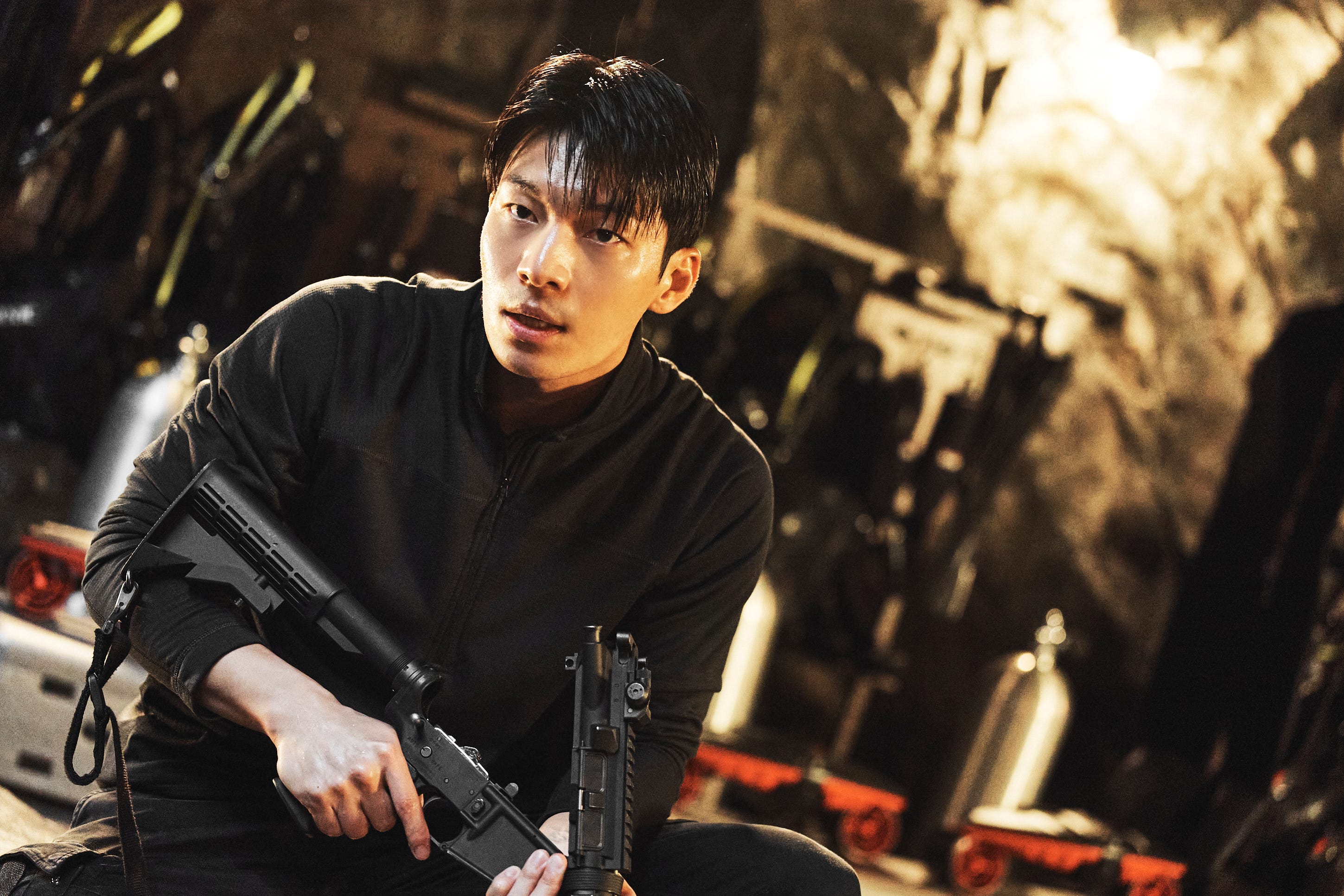
And finally, I’ve read so many comments on social media that basically said that there was no reason for Wi Ha-joon to appear this season (other than as eye candy), because his role is superfluous. It’s true that his character Jun-ho — Front Man’s younger brother — isn’t as integral as he was during season 1. But without him, the coastguard would not have found the Island where the bloody games were played. For now, these games are no longer in operation (at least not in South Korea). And there’s something to be said for 455 Koreans not dying every few months on this island.
As for why he didn’t kill In-ho (aka Front Man) when he had the chance — for the same reason Front Man didn’t kill him at the end of season 1. They are brothers. The fact that he refers to In-ho as hyung (the familiar term for older brother) rather than geh saekki/개새끼 (son of a bitch) or sshibal saekki/씨발 새끼 (fucking asshole) tells you that he is still emotionally tied to him. He regards In-ho as his brother first, and the Front Man second.
As I wrote in 2021 after the first season was released:
There’s a climactic scene near the end of “Squid Game,” where two brothers face off. Both have guns. You can see dread, fear and conflict in their eyes. There is no optimism, because survival for one means death for the other. That scene encapsulated the turmoil some Korean soldiers went through during the Korea War when their country was split into two — making enemies out of friends and relatives, and forcing them to decide whether to kill or be killed by loved ones.
ETA: Also, you may hear me talk about the series finale on NPR’s Pop Culture Happy Hour podcast.
© 2025 JAE-HA KIM | All Rights Reserved
K-DRAMA INDEX

These are some of my reviews and essays about K-Dramas (and also Korean films and other Korean-centric projects). You may also read more about my take on Korean pop culture in outlets such as Rolling Stone, Mashable, Victoria & Al…
I have so many thoughts when it comes to Squid Game. I have to say I had a completely different take when it came to the VIPs. The bad acting, the succotash line, and even some of the voices seeming almost auto-tuned… makes me feel like it’s intentional the way the VIPs are portrayed badly.
I think we as the viewers are supposed to identify with the players and by having well acted VIPs we would humanize them too much—they’re the bad guys, like not even interesting bad guys. The Front Man has a story, the Recruiter and Boat Captain have stories. I think carving out more space for the VIPs, with say a Blanchett cameo, gives them too much power.
Knowing very little about Korean History, I always felt that Squid Game is an allegory and a critique of society and capitalism as a whole. Even though I may look like and talk like the VIPs, I am *not* and never /will/ be a VIP.
For me even though it is a Korean show it has never been specific to Korea and because it is a critique of society as a whole we as Americans can’t identify with the VIPs. Even if, actually probably especially if, we identify with the VIPs it needs to be reinforced that we, the viewer, are *not* VIPs.
We are all in this heightened agitated state in the Squid Game jumping from one moral dilemma to another, do we identify with the Xs or Os? Brexit or Remain? Red or Blue? Are we like 222 limping along or 333 torn between love and his own best interests?
Actually I have a lot to say about that last idea that we are all players in the Squid Game. But I’ve already written 3(?) paragraphs in the comment section 😅
I haven’t watched the second season and don’t intend to watch the third… and I agree with you about Cate Blanchett.